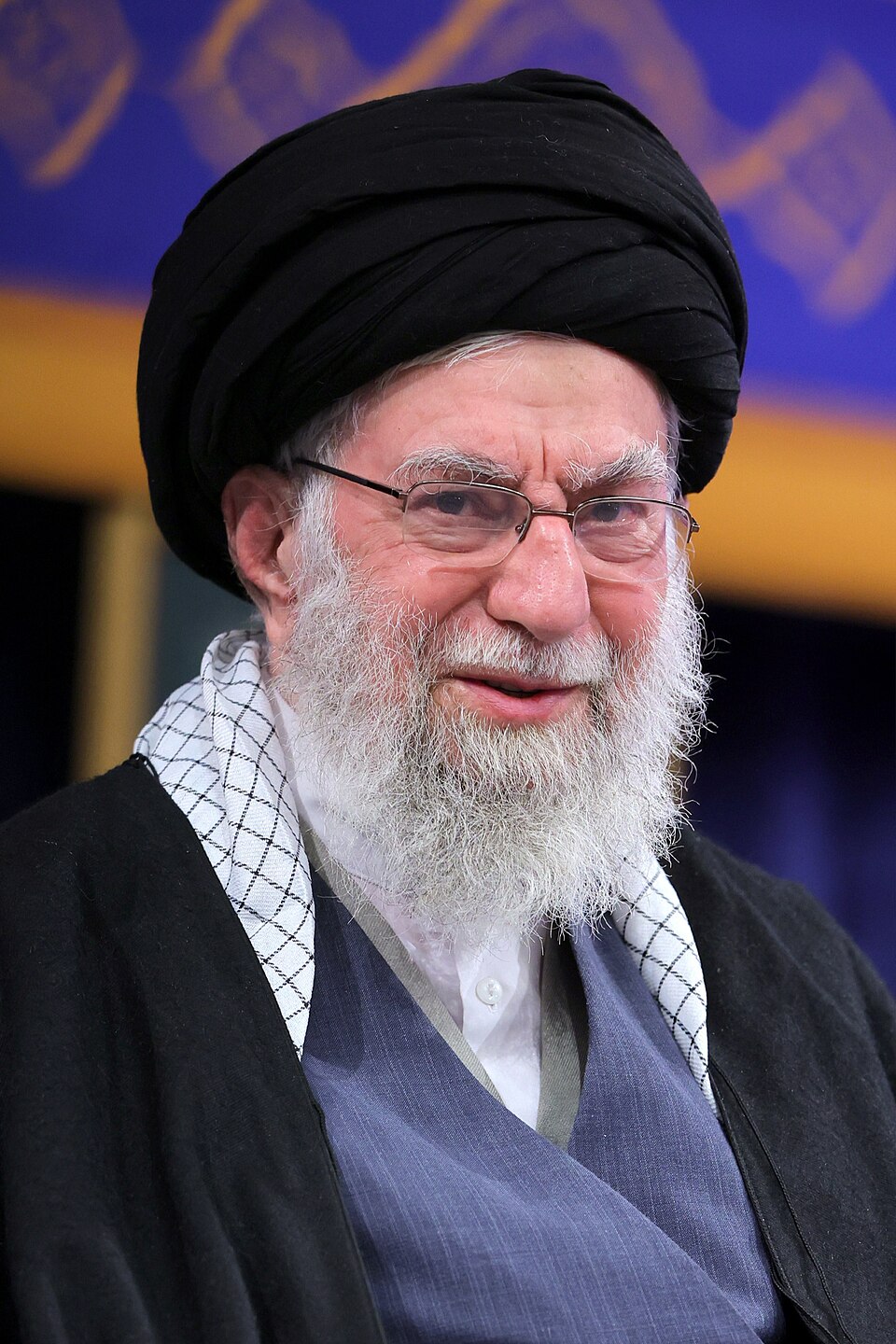
Iran Confirms Supreme Leader Khamenei's Death Amidst US-Israeli Attacks
In a development that has sent shockwaves across the Middle East and beyond, Iranian state media has confirmed the death of Supreme Leader Ayatollah Ali Khamenei. The long-serving leader was reportedly killed at his office following a series of coordinated US-Israeli attacks that commenced early on Saturday. This confirmation follows a period of conflicting reports and speculation, now culminating in a 40-day national mourning period announced by Iranian authorities. The gravity of Khamenei's assassination, particularly in the context of direct US-Israeli attacks, marks a significant and volatile turning point for Iran and the broader international community.
The Confirmation and Conflicting Reports Surrounding Khamenei's Demise
The path to the official confirmation of Ayatollah Ali Khamenei’s death was fraught with initial uncertainty and contradictory statements. Early reports from US and Israeli officials hinted at his demise, but Iranian state media, including Tasnim and Mehr news agencies, initially countered these claims, asserting that Khamenei remained "steadfast and firm in commanding the field." This attempt to project stability quickly gave way to the undeniable truth as the full scope of the coordinated strikes became apparent.
The definitive confirmation arrived from multiple high-level sources. US President Donald Trump took to his Truth Social platform to declare that the 86-year-old Khamenei was killed in the joint US-Israeli strikes, which began on Saturday. Trump’s post was unequivocal: “He was unable to avoid our Intelligence and Highly Sophisticated Tracking Systems and, working closely with Israel, there was not a thing he, or the other leaders that have been killed along with him, could do.” This statement not only confirmed Khamenei’s death but also underscored the precision and intelligence capabilities attributed to the US-Israeli operation.
Concurrently, Israeli Prime Minister Benjamin Netanyahu added to the growing consensus, stating there were “growing signs” that Khamenei had been killed. Further corroboration came from the Reuters news agency, citing an unnamed senior Israeli official who reported that Khamenei’s body had been located. The eventual confirmation by Iranian state broadcaster IRIB solidified these claims, setting the stage for a period of profound national mourning and geopolitical uncertainty. The deliberate nature of these khamenei us attacks targeting Iran's supreme leader suggests a calculated move with potentially far-reaching implications.
Operation Epic Fury and Its Objectives
The coordinated military action that led to the death of Supreme Leader Ali Khamenei has been officially dubbed "OPERATION EPIC FURY" by the Pentagon. This joint US-Israeli undertaking was not merely an act of retaliation but, according to US President Donald Trump, a concerted effort specifically aimed at Iran's top leadership with the explicit intention of toppling the Iranian government. This bold declaration signals a dramatic shift in policy, moving beyond containment to direct regime change aspirations.
The strikes commenced in the earliest hours of Saturday morning, with initial reports emerging from the capital city of Tehran. Both the US and Israel claimed responsibility for these opening salvos, which were swiftly followed by a cascade of bombings across multiple cities and provinces throughout Iran. Iranian media reports, citing the Red Crescent, indicated that the attacks targeted 24 provinces, resulting in at least 201 fatalities. Among the most tragic incidents reported were strikes on two schools, including the Shajareh Tayyebeh girls’ elementary school in Minab, where at least 108 lives were lost, and another school east of Tehran, claiming two more.
President Trump's statement on Truth Social was not just a confirmation of Khamenei's death but a direct appeal to the Iranian populace: “This is the single greatest chance for the Iranian people to take back their Country.” He further urged the Islamic Revolutionary Guard Corps (IRGC) and Police to “peacefully merge with the Iranian Patriots.” Israeli Prime Minister Netanyahu echoed the sentiment of targeting high-value individuals, asserting that many “senior figures” had been “eliminated” in the wave of attacks. He specifically mentioned the killing of “commanders in the Revolutionary Guard and senior officials in the nuclear programme,” vowing to continue such operations. The scope and stated intent of OPERATION EPIC FURY underscore the strategic importance placed on these khamenei us attacks, aiming to fundamentally alter Iran's political landscape.
For more detailed insights into the objectives and declarations made by President Trump regarding this operation, you can read our comprehensive analysis: Operation Epic Fury: Trump Confirms Khamenei's Killing, Calls for Iran's Overthrow.
A Nation in Transition: What Happens Next for Iran?
The assassination of Ayatollah Ali Khamenei introduces an unprecedented level of uncertainty into an already volatile region. Khamenei, who served as Iran’s Supreme Leader since 1989, wielded ultimate authority over all branches of government, the military, the judiciary, and acted as the country’s spiritual guide. His leadership followed the founder of post-shah Iran, Ayatollah Ruhollah Khomeini, who steered the 1979 revolution, cementing Khamenei’s role as the pivotal figure in the Islamic Republic for over three decades.
While Iranian authorities have long held contingency plans for the possible death or incapacitation of Khamenei, especially in the event of a war with the US and Israel, the suddenness and nature of his demise via targeted khamenei us attacks injects new complexities. Barbara Slavin, a distinguished fellow at the Stimson Center, noted that Iran “has a plan” in place for such an event. “There will probably be a council that will be set up to run the country. It may already have been running the country, as far as we know,” she explained. This interim council would likely manage the state apparatus and oversee the process of selecting a successor, a critical decision that could profoundly shape Iran's future trajectory.
The process of succession itself is shrouded in secrecy but traditionally involves the Assembly of Experts, a body of 88 religious scholars. The choice of the next Supreme Leader will be paramount, influencing not only Iran’s domestic policies but also its foreign relations and its posture towards regional adversaries and global powers. The absence of a strong, established successor could lead to internal power struggles, potentially fracturing the carefully balanced political structure Khamenei maintained. The coming weeks and months will reveal how Iran navigates this profound leadership vacuum and the immediate consequences of these devastating strikes.
Understanding the full ramifications of this seismic event requires a deeper dive into Iran’s internal dynamics and potential future scenarios. For further analysis on what this means for the nation, explore our related article: Iran After Khamenei: What His Death in US-Israeli Strikes Means.
Escalation Fears and Regional Impact
The confirmation of Supreme Leader Ali Khamenei's death following direct khamenei us attacks immediately intensifies concerns about regional escalation. The ongoing conflict, already a source of international anxiety, now faces the very real possibility of expanding further, drawing in more actors and potentially leading to a wider conflagration across the Middle East.
The nature of the strikes, targeting not only senior leadership but also civilian infrastructure like schools, as reported by Iranian media, underscores the extreme tension. Israeli Prime Minister Netanyahu’s explicit declaration of killing “commanders in the Revolutionary Guard and senior officials in the nuclear programme,” along with his vow to “continue” such actions, signals a determined and aggressive stance. This rhetoric, coupled with President Trump’s call for the Iranian government to be toppled and for the IRGC to merge with "Iranian Patriots," indicates a strategic objective far beyond simple deterrence.
The geopolitical implications are immense. Iran's response to such a monumental loss and overt challenge to its sovereignty will be closely watched. Any retaliatory action, or even the process of internal transition, could trigger a chain reaction affecting global oil markets, international shipping lanes, and the security dynamics of neighboring countries. The role of proxies and regional militias, often supported by Iran, also comes into sharp focus, as they may act independently or under new directives, potentially widening the scope of conflict.
International bodies and world powers are now faced with an urgent need to de-escalate tensions and prevent the conflict from spiraling out of control. The long-term stability of the Middle East, a region already grappling with numerous challenges, now hangs precariously in the balance, shaped by the immediate aftermath of these pivotal strikes and the leadership vacuum in Iran.
Conclusion
The confirmed death of Iran’s Supreme Leader Ayatollah Ali Khamenei in a series of coordinated US-Israeli attacks marks an epochal moment in modern Middle Eastern history. The operation, explicitly aimed at decapitating Iran’s leadership and potentially instigating regime change, has brought to an abrupt end Khamenei’s three-decade tenure, plunging Iran into an immediate period of mourning and profound political uncertainty. While Iranian authorities reportedly have contingency plans for succession, the direct assassination by foreign powers adds an unprecedented layer of complexity and potential for instability.
The world now holds its breath, watching closely how Iran navigates this immense leadership void and whether the call for its populace to "take back their Country" gains traction. The immediate future promises a landscape fraught with heightened tensions, the specter of regional escalation, and a pivotal moment for international diplomacy. The ramifications of these audacious strikes will undoubtedly resonate for years to come, reshaping the geopolitical map of the Middle East and demanding careful consideration from global leaders.