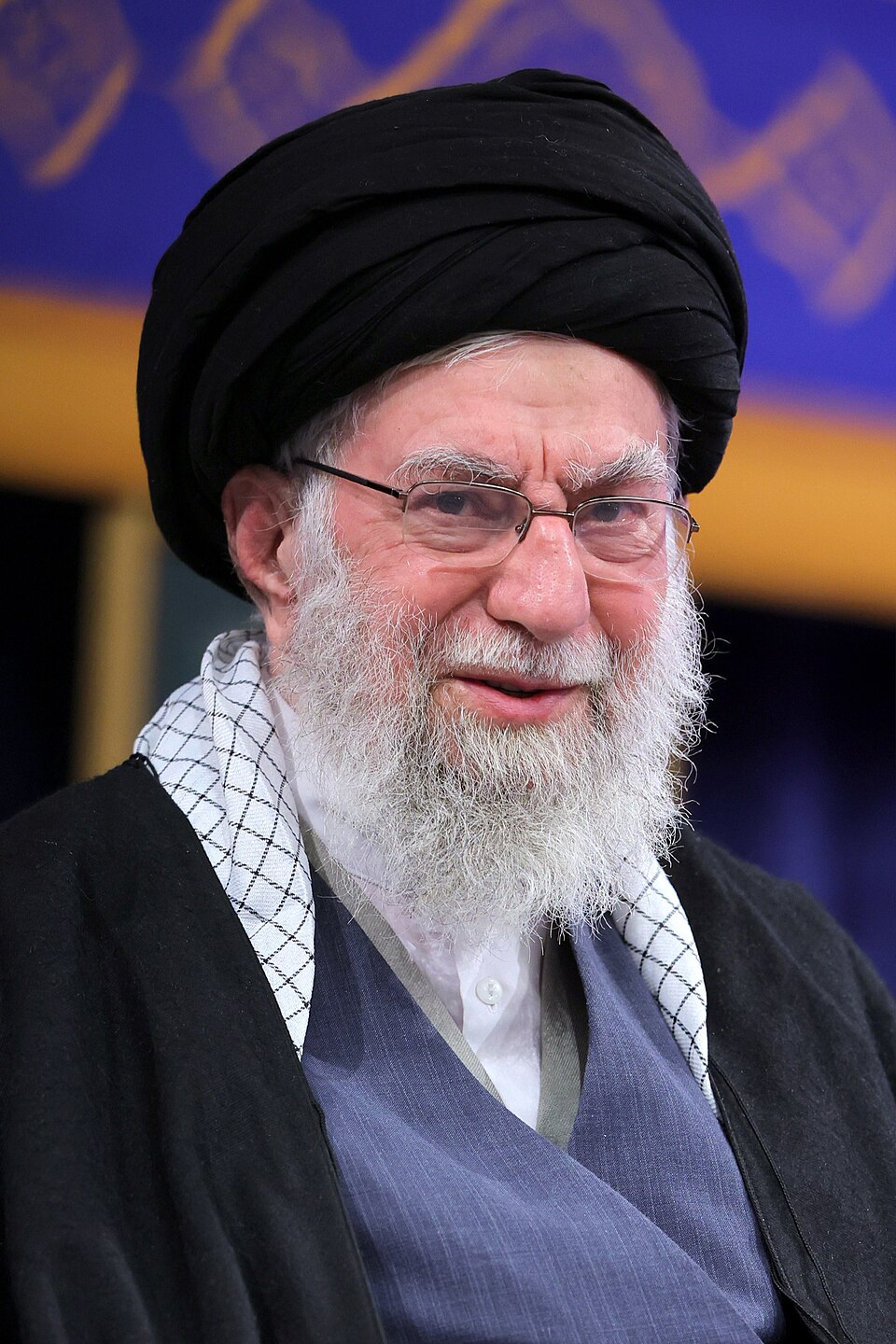
Operation Epic Fury: The Dawn of a New Geopolitical Reality in Iran
The Middle East has been thrust into an unprecedented era of uncertainty following the confirmation of Iranian Supreme Leader Ayatollah Ali Khamenei's death. In a joint US-Israeli operation, dubbed "Operation Epic Fury" by the Pentagon, a series of devastating strikes targeted critical infrastructure and key leadership figures across Iran, culminating in the killing of the 86-year-old spiritual and political head. This dramatic development, confirmed by Iranian state media after initial conflicting reports, has not only sparked a 40-day national mourning period but has also prompted US President Donald Trump to issue a bold call for the Iranian people to overthrow their government. The reverberations of these khamenei us attacks are poised to redefine regional power dynamics and global stability.
Confirmation Amidst Initial Denials
Reports of Khamenei's death first emerged from US and Israeli officials, with President Donald Trump taking to his Truth Social platform early on Saturday to declare the Supreme Leader's demise. Trump asserted, "He was unable to avoid our Intelligence and Highly Sophisticated Tracking Systems and, working closely with Israel, there was not a thing he, or the other leaders that have been killed along with him, could do." This strong statement preceded official confirmation from within Iran. Initially, Iranian news agencies like Tasnim and Mehr had reported Khamenei as "steadfast and firm in commanding the field," attempting to project continuity and control. However, these denials were short-lived, as Iranian state broadcaster IRIB and other official channels eventually confirmed his passing, marking a historic turning point.
Israeli Prime Minister Benjamin Netanyahu had also fueled the reports, citing "growing signs" of Khamenei's death, while Reuters, referencing an unnamed senior Israeli official, claimed his body had been located. The unified assertion from Washington and Jerusalem, followed by Iran's eventual acknowledgement, underscored the precision and impact of Operation Epic Fury.
Precision and Purpose: The Scope of the Strikes
Operation Epic Fury was a multifaceted aerial assault, reportedly focused on decapitating Iran's leadership and strategic capabilities. The strikes commenced in the early hours of Saturday morning, with Tehran being among the first cities targeted, followed by bombings across multiple provinces. According to Iranian media, citing the Red Crescent, the attacks hit 24 provinces, resulting in at least 201 fatalities. Tragically, these included strikes on civilian targets, with Israel reportedly hitting two schools. The Shajareh Tayyebeh girls' elementary school in Minab saw at least 108 lives lost, and two others were killed at a school east of Tehran.
Beyond the devastating human cost, the stated objectives of the operation were clear: to eliminate senior figures within Iran's military and nuclear programs. Netanyahu confirmed the killing of "commanders in the Revolutionary Guard and senior officials in the nuclear programme," signaling a deliberate effort to dismantle the core apparatus of the Iranian state. This strategic focus, coupled with Trump's subsequent call for regime change, painted a picture of an operation designed not just to retaliate, but to fundamentally alter the geopolitical landscape.
The Unraveling of Supreme Authority: Khamenei's Legacy and Succession
Ayatollah Ali Khamenei's death leaves a monumental void at the helm of the Islamic Republic. Having served as Supreme Leader since 1989, he succeeded Ayatollah Ruhollah Khomeini, the architect of the 1979 Iranian Revolution. Khamenei's nearly 34-year tenure saw him wield ultimate authority over all branches of government—the military, judiciary, and spiritual life of the nation. His pronouncements shaped both domestic policy and Iran's often-antagonistic foreign relations, making him a central figure in global geopolitics for decades.
A Pillar of the Islamic Republic
As Supreme Leader, Khamenei was far more than a figurehead; he was the ideological compass and ultimate decision-maker for Iran. His word was law, and his influence permeated every facet of Iranian society. His role was to safeguard the principles of the revolution, guide the nation through various crises, and counter perceived external threats. His long rule provided a degree of stability, albeit one often characterized by internal repression and external defiance against Western powers.
Khamenei's passing marks the end of an era defined by his steadfast, often confrontational, stance against the United States and Israel, his support for proxy groups in the region, and the advancement of Iran's controversial nuclear program. His absence will undoubtedly trigger a period of intense introspection and potential power struggles within the ruling establishment.
Contingency Plans and the Road Ahead
While the assassination injects immense uncertainty into an already volatile region, Iranian authorities have long prepared for the eventuality of Khamenei's death, particularly in scenarios involving conflict with the US and Israel. Barbara Slavin, a distinguished fellow at the Stimson Center, noted that Iran "has a plan" in place. This plan likely involves the swift establishment of a provisional council to manage the country's affairs and oversee the selection of a new Supreme Leader. The Assembly of Experts, a body of 88 clerics, is constitutionally responsible for choosing the next Supreme Leader from among qualified candidates. This process, however, is rarely straightforward and could be fraught with political maneuvering and ideological battles, especially given the current external pressures. Understanding these succession protocols is key to anticipating Iran's next steps. For more insights, refer to Iran After Khamenei: What His Death in US-Israeli Strikes Means.
Trump's Call for Overthrow: A Gambit for Iranian Freedom?
Beyond the military objectives, a defining element of Operation Epic Fury is President Trump's explicit call for regime change in Iran. In his Truth Social post, he declared, "This is the single greatest chance for the Iranian people to take back their Country," further urging the Islamic Revolutionary Guard Corps (IRGC) and police to "peacefully merge with the Iranian Patriots." This direct appeal to the Iranian populace and military institutions is a high-stakes gamble, aimed at fostering internal dissent and facilitating a transition of power.
Empowering the Iranian People
Trump's message taps into long-standing grievances among segments of the Iranian population who have endured economic hardship, political repression, and restrictions on personal freedoms. Protests against the government have sporadically erupted across Iran in recent years, demonstrating a visible desire for change. The US president's statement aims to galvanize these sentiments, presenting Khamenei's death not just as a military success, but as a catalyst for internal revolution. The effectiveness of such a call, however, remains to be seen. The IRGC, a formidable military and economic force, has historically been fiercely loyal to the Supreme Leader and the principles of the Islamic Revolution. Convincing them to defect or align with "Iranian Patriots" would represent a monumental shift in the country's power structure.
Geopolitical Fallout and Regional Stability
The implications of this call for overthrow extend far beyond Iran's borders. It sends a clear message to other nations in the region, particularly those allied with Iran, about the potential for direct intervention and regime alteration. For countries like Saudi Arabia and Israel, long-standing adversaries of Iran, this development could be viewed as a strategic victory, potentially recalibrating the regional balance of power. Conversely, it risks further destabilizing an already volatile region, potentially leading to increased proxy conflicts or direct military confrontations. The global community will be watching closely to see how Iran's internal dynamics unfold and how regional actors react to this unprecedented moment.
Conclusion
The killing of Supreme Leader Ayatollah Ali Khamenei in the joint US-Israeli "Operation Epic Fury" marks a watershed moment in Middle Eastern history. It has shattered the status quo, plunging Iran into an uncertain future while simultaneously igniting President Trump's bold vision for the nation's overthrow. The immediate aftermath has seen a declared period of mourning in Iran, coupled with heightened regional tensions and international scrutiny. As Iran grapples with the immense void left by its longtime leader and navigates the complexities of succession, the world watches for any indication of how the Iranian people and its institutions will respond to calls for change. The reverberations of these khamenei us attacks are profound, promising to reshape not only Iran's destiny but also the geopolitical landscape of the entire region for years to come.